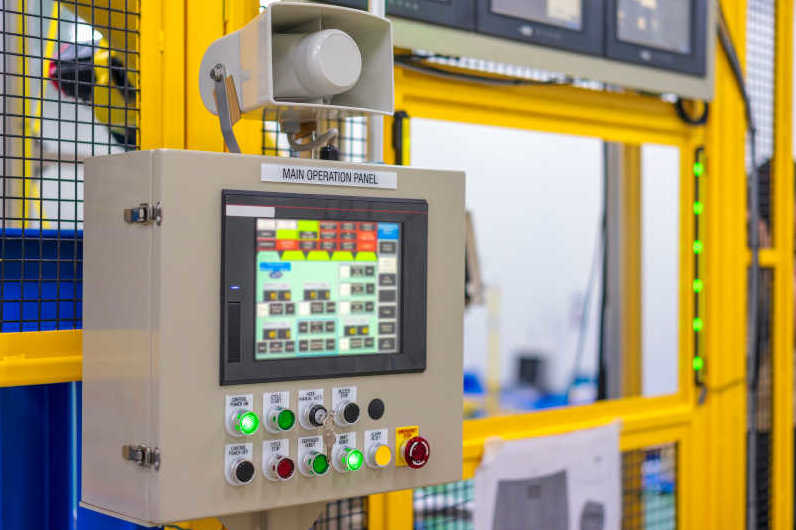
The fourth generation Industry is already in use for more 20 years and, beside those three predecessor which emphasized for energy efficiency, in Industry 4.0 digitization and communication means direction in which automation and robots converge together, resulting control systems at the highest performance level.
Industrial development continue to move towards personalizing the collaboration between human and machine through collaborative robots and automation flexibility designated as the future of Industry 5.0.
Beginning from steam engine development and until nowadays, industry time was divided into 4 periods called industrial revolutions.

The first industrial revolution (Mechanization) – meant the transition from agriculture to industry with the advent of the steam engine invented by James Watt in 1765.
The second industrial revolution (Electrification) – was marked by discovery of electricity before the early 1900s, the by the advent of internal combustion engine and then by the telegraph and telephone.
The third industrial revolution (Automation) – was marked by using of nuclear energy since the 1950s and of transistor in 1970s, resulting in the development of telecommunications and computers.
The fourth industrial revolution (Digitization) – corresponds to the beginning of the third millennium and is the only one that is not based on the form of energy, but the concept called communication between industrial machines, starting from digitization technology and continuing with artificial intelligence, Internet of Things, autonomy, virtual reality.
Because of rapid progress of technology in recent years, we can talk about the beginning of the fifth industrial revolution
(Customization) to be developed in the near future in terms of cooperation between human intelligence and computational technology, using both collaborative robots, but also the flexibility of automation in production.
Interconnecting robots and automation is the future of industry